Liminal Cohesions II
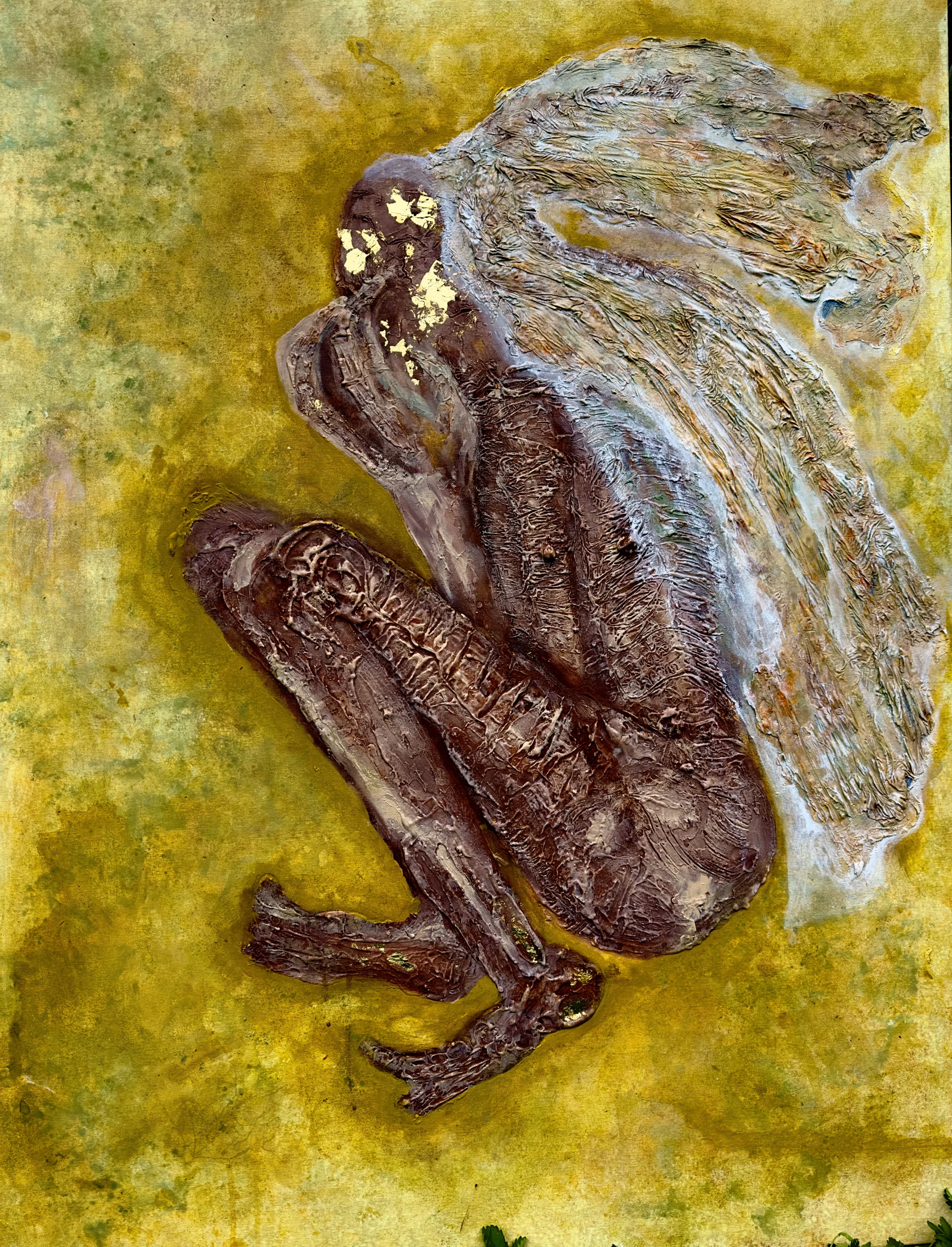
This exhibition is an effort to create an "open space" on the ground of art, reflecting the unique states of "intermediate existences" as passengers drawn into "intermediary spaces." Here, the concept of "interval," used metaphorically, is designed to encompass all conceivable spaces that imply an interval. Liminal Cohesions not only sheds light on the concept of truth through its aesthetic and beautiful perceptions but also through the literary and philosophical connections it establishes. In the words of Merleau-Ponty, what is produced is intertwined with an ontology of seeing and vision. The common truth of the philosopher and the painter is a primal (brutal-savage) truth of existence; it is the truth of the intersection between the seer and the seen, the intertwining of the visible and the invisible. (M. Merleau-Ponty, Trans. A. Soysal, Metis Publishing) In the exhibition design of Liminal Cohesions, the interval space is a detail, refuse, insignificant, not hesitant but an entirely independent entity. It may appear ambiguous; however, it is a suspended space that is both bound to the law and violates it, slightly open, vague, concealed, and dynamic. While it points to two opposing certainties, it simultaneously reveals its own ambiguity—a place that is not dark but uncanny. It marks time without providing history, possesses volume and weight but is not measurable; it implies the promise of the yet unseen and the invisibility of what has already occurred, the potentiality of what has not yet happened, an opening to conscious ignorance rather than clumsiness, and the conscious existence of impotence in intermediary spaces. In this exhibition, interval spaces are as much the "imaginary realms" that Ibn Arabi attributed an ontological value to as they are arbitrary spaces, as named by Vogl in reference to Kafka's Castle. An arbitrary space is the boundless kingdom of limits; it is both distant and omnipresent. It is the twilight that spreads recklessly between the states of "no longer" and "not yet," occupying its place within fluidity and uncertainty. In the intermediary space, each interruption of spatial expansion is dramatized. However, the coordinates, orientations, and matrix here are different and flawed from the known. Composed of unfinished "intermediacy," it has neither boundary, horizon, interiority, nor vastness. It is the sum of aimless singularities and virtual connections. It is a dwelling of the unhomogeneous, measureless, and indecisive, a repository of potential powers that have yet to materialize. When they are in a metaphorical context, intermediate spaces such as corridors, labyrinths, corridors, passages, and culverts, which imply mental journeys, complex uncertainties, and internal transformations and changes, are in alliance with their appropriate owners. Similar to intervals, intermediate existences also carry the ability to be and not to be at the same time, here and now, because they have the ‘ability (potential) to be, to be and not to be,’ and because they are both able to be and not to be. As Vogl emphasizes, for the In-Betweens, skill or power (potentia) is not only the ability to be or to do something, but also not to actualize something, not to make a transition to actuality. Skill is an intense relationship with incompetence, and the declaration of a state of not being. It is such a state that it continues within the actuality of the state of being. In Liminal Cohesions, the ‘intermediate zone’ opens up a mental/abstract space of consciousness for those in between, cutting off all competition to be determined by rules, and removing the merciless judgment of principle from its infinite tropic. In the space that becomes vague, the ghostly meanings of the intermediate existences are taken over. The meaning that can be reached through thought loses its transparency and instead, the in-betweens that become transparent through a conflict perpetuate a state of ‘not being fully known’. The fluctuation in the intermediate areas opens up a gap that marks the world from one end to the other and the crack in this vague area becomes the world of those in limbo itself. The place where the clarity of the flow of events is lost turns into a free zone where the consciousness that turns the certainty of the world with laws is defeated. No matter what we call the gap, passage, corridor, corridor, tunnel, well, the beings in between are, as Sartre puts it in Being and Nothingness, ‘being-in-itself’ and are in a state of being-present-to-itself (la presencea soi). J. P. Sartre, Being and Nothingness, İthaki Publishing.137) In addition to all these, Being is in the corridor as something that establishes nothingness. ‘Nothingness derives its being from being’, it encounters the nothingness of being it possesses only at the boundaries of being… what is not being exists only on the surface of being. (Sartre, 65). Philosophically and phenomenologically, the being of the in-between is in a relationship both with being, as in Sartre’s perfect definition, and with what is not. The artist who knowingly produces intermediate forms, spaces and fictions has to open an intermediate space when he wants to follow the path of view that opens despite obstacles because the world has hit a limit and has failed and he (the artist) has been obliged to continue swimming in the blurred river of appearance. For him, not only the appearances but also the world in which they flow has been blurred. Not only the field of view but also the world in which it takes place has been infected with the gap and is suspended in space. In his aesthetic attitude that is in between and is suitable for the gap, the artist comes into contact with the joints of all the aspects and dimensions that are assumed to bring this world together from within. When viewed from the perspective of concepts representing regularity and law, he is left in another gap outside of the generally accepted gaps. Although those in between have a weak voice that says ‘I can try everything, of course, but here I stand, that is, I hold myself here’ as Ricour emphasizes, in time they evolve into the form of ‘you count me despite everything’ as the existence of their existence. (Paul Ricoeur, The Other as Himself, DoğuBatı Yay., 229) The togetherness of those in between or those left on the threshold is an alliance situation produced by the gap. John Berger's expression Orphans Alliance, although a sociological expression, also corresponds to the expansion of this metaphorical togetherness. (Berger, Hoşbeş, Metis Yay.) Like those who take vague borders as their place, there are various meetings of meaning in the intermediate stages of existential transition processes and there are entanglements of existence woven with savior-saved relations that are mixed together like Gadamer's 'fusion horizons'. (Gadamer, Turth and Method, Continuum New York). The spaces between the lines as the spaces of multiple identities will not be neglected in this exhibition and will be emphasized as a cultural sociological, internal-individual-abstract series of meanings about the human being. Post-modern man, as a post-traumatic subject, is a new subject, stripped of its symbolic identities, like a victim who has survived his own death. (Slavoj Zizek, Olay, Monokl Yay. 77) And our current era has to write new rights as well as new compromises and truths for these identities. And it is good that, in its cycle, the cosmos continues to cover man himself with an endless blue blanket, with constant compassion, as well as spaces of intervals, as an intermediate entity in the passage where each dark night meets the light.
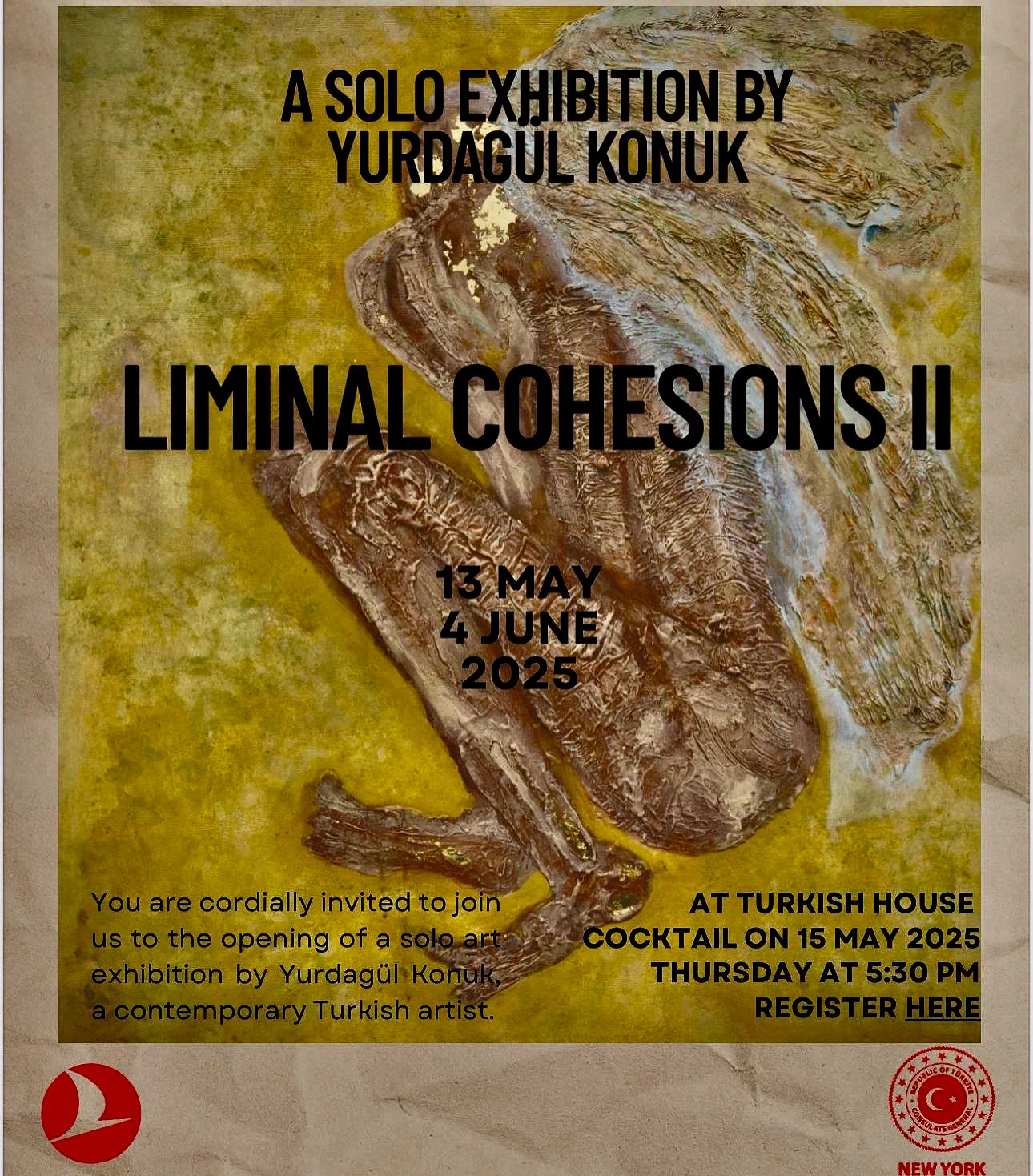
This exhibition is an effort to create an "open space" on the ground of art, reflecting the unique states of "intermediate existences" as passengers drawn into "intermediary spaces." Here, the concept of "interval," used metaphorically, is designed to encompass all conceivable spaces that imply an interval.
Liminal Cohesions not only sheds light on the concept of truth through its aesthetic and beautiful perceptions but also through the literary and philosophical connections it establishes. In the words of Merleau-Ponty, what is produced is intertwined with an ontology of seeing and vision. The common truth of the philosopher and the painter is a primal (brutal-savage) truth of existence; it is the truth of the intersection between the seer and the seen, the intertwining of the visible and the invisible. (M. Merleau-Ponty, Trans. A. Soysal, Metis Publishing)
In the exhibition design of Liminal Cohesions, the interval space is a detail, refuse, insignificant, not hesitant but an entirely independent entity. It may appear ambiguous; however, it is a suspended space that is both bound to the law and violates it, slightly open, vague, concealed, and dynamic. While it points to two opposing certainties, it simultaneously reveals its own ambiguity—a place that is not dark but uncanny. It marks time without providing history, possesses volume and weight but is not measurable; it implies the promise of the yet unseen and the invisibility of what has already occurred, the potentiality of what has not yet happened, an opening to conscious ignorance rather than clumsiness, and the conscious existence of impotence in intermediary spaces.
In this exhibition, interval spaces are as much the "imaginary realms" that Ibn Arabi attributed an ontological value to as they are arbitrary spaces, as named by Vogl in reference to Kafka's Castle. An arbitrary space is the boundless kingdom of limits; it is both distant and omnipresent. It is the twilight that spreads recklessly between the states of "no longer" and "not yet," occupying its place within fluidity and uncertainty. In the intermediary space, each interruption of spatial expansion is dramatized. However, the coordinates, orientations, and matrix here are different and flawed from the known. Composed of unfinished "intermediacy," it has neither boundary, horizon, interiority, nor vastness. It is the sum of aimless singularities and virtual connections. It is a dwelling of the unhomogeneous, measureless, and indecisive, a repository of potential powers that have yet to materialize.
When they are in a metaphorical context, intermediate spaces such as corridors, labyrinths, corridors, passages, and culverts, which imply mental journeys, complex uncertainties, and internal transformations and changes, are in alliance with their appropriate owners. Similar to intervals, intermediate existences also carry the ability to be and not to be at the same time, here and now, because they have the ‘ability (potential) to be, to be and not to be,’ and because they are both able to be and not to be. As Vogl emphasizes, for the In-Betweens, skill or power (potentia) is not only the ability to be or to do something, but also not to actualize something, not to make a transition to actuality. Skill is an intense relationship with incompetence, and the declaration of a state of not being. It is such a state that it continues within the actuality of the state of being.
In Liminal Cohesions, the ‘intermediate zone’ opens up a mental/abstract space of consciousness for those in between, cutting off all competition to be determined by rules, and removing the merciless judgment of principle from its infinite tropic. In the space that becomes vague, the ghostly meanings of the intermediate existences are taken over. The meaning that can be reached through thought loses its transparency and instead, the in-betweens that become transparent through a conflict perpetuate a state of ‘not being fully known’.
The fluctuation in the intermediate areas opens up a gap that marks the world from one end to the other and the crack in this vague area becomes the world of those in limbo itself. The place where the clarity of the flow of events is lost turns into a free zone where the consciousness that turns the certainty of the world with laws is defeated.
No matter what we call the gap, passage, corridor, corridor, tunnel, well, the beings in between are, as Sartre puts it in Being and Nothingness, ‘being-in-itself’ and are in a state of being-present-to-itself (la presencea soi). J. P. Sartre, Being and Nothingness, İthaki Publishing.137) In addition to all these, Being is in the corridor as something that establishes nothingness. ‘Nothingness derives its being from being’, it encounters the nothingness of being it possesses only at the boundaries of being… what is not being exists only on the surface of being. (Sartre, 65). Philosophically and phenomenologically, the being of the in-between is in a relationship both with being, as in Sartre’s perfect definition, and with what is not. The artist who knowingly produces intermediate forms, spaces and fictions has to open an intermediate space when he wants to follow the path of view that opens despite obstacles because the world has hit a limit and has failed and he (the artist) has been obliged to continue swimming in the blurred river of appearance. For him, not only the appearances but also the world in which they flow has been blurred. Not only the field of view but also the world in which it takes place has been infected with the gap and is suspended in space. In his aesthetic attitude that is in between and is suitable for the gap, the artist comes into contact with the joints of all the aspects and dimensions that are assumed to bring this world together from within. When viewed from the perspective of concepts representing regularity and law, he is left in another gap outside of the generally accepted gaps. Although those in between have a weak voice that says ‘I can try everything, of course, but here I stand, that is, I hold myself here’ as Ricour emphasizes, in time they evolve into the form of ‘you count me despite everything’ as the existence of their existence. (Paul Ricoeur, The Other as Himself, DoğuBatı Yay., 229)
The togetherness of those in between or those left on the threshold is an alliance situation produced by the gap. John Berger's expression Orphans Alliance, although a sociological expression, also corresponds to the expansion of this metaphorical togetherness. (Berger, Hoşbeş, Metis Yay.) Like those who take vague borders as their place, there are various meetings of meaning in the intermediate stages of existential transition processes and there are entanglements of existence woven with savior-saved relations that are mixed together like Gadamer's 'fusion horizons'. (Gadamer, Turth and Method, Continuum New York). The spaces between the lines as the spaces of multiple identities will not be neglected in this exhibition and will be emphasized as a cultural sociological, internal-individual-abstract series of meanings about the human being.
Post-modern man, as a post-traumatic subject, is a new subject, stripped of its symbolic identities, like a victim who has survived his own death. (Slavoj Zizek, Olay, Monokl Yay. 77) And our current era has to write new rights as well as new compromises and truths for these identities. And it is good that, in its cycle, the cosmos continues to cover man himself with an endless blue blanket, with constant compassion, as well as spaces of intervals, as an intermediate entity in the passage where each dark night meets the light.
Diğer sergiler
Tümü
Liminal Cohesions I
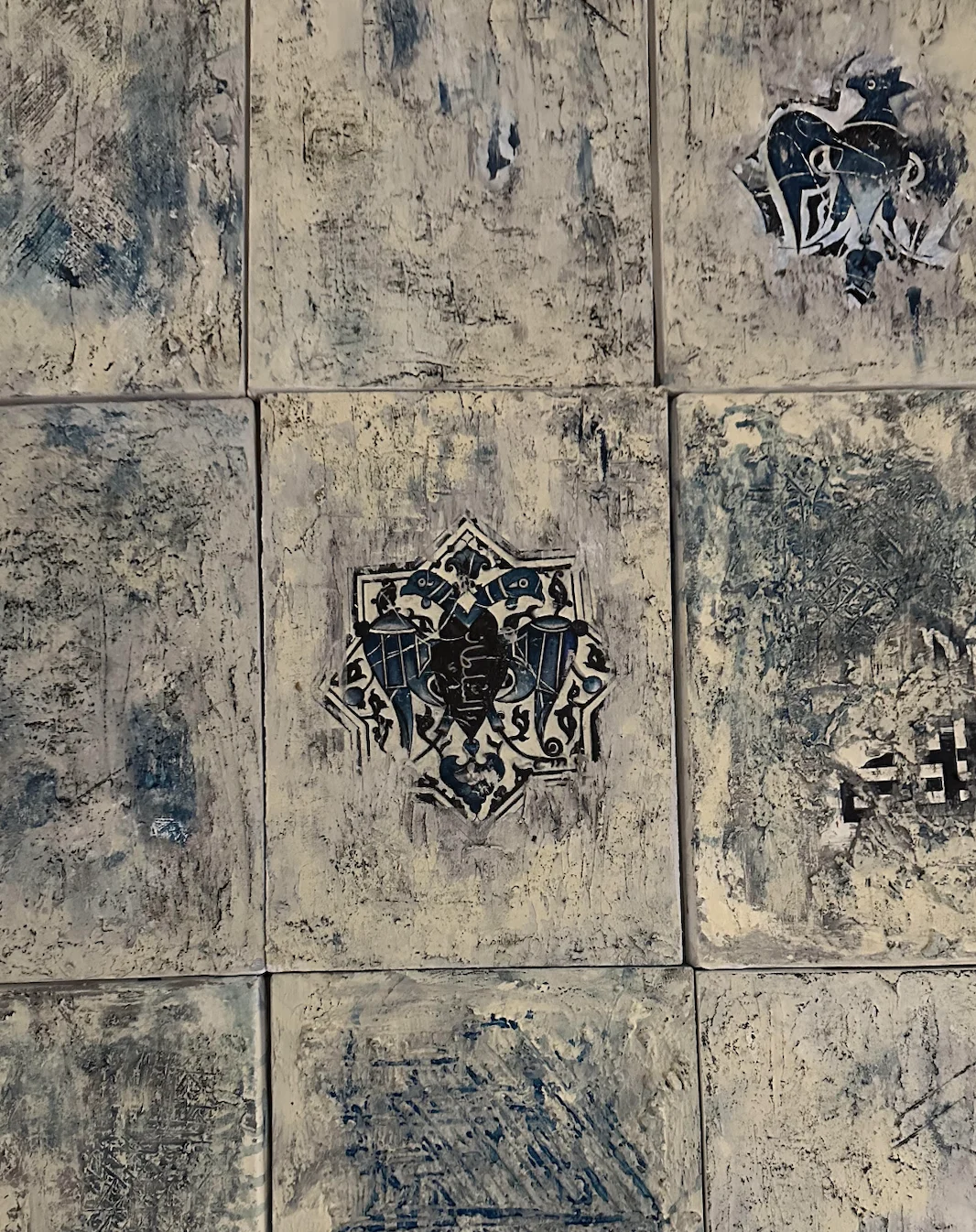
Unusual Component (Puslu Parça)